
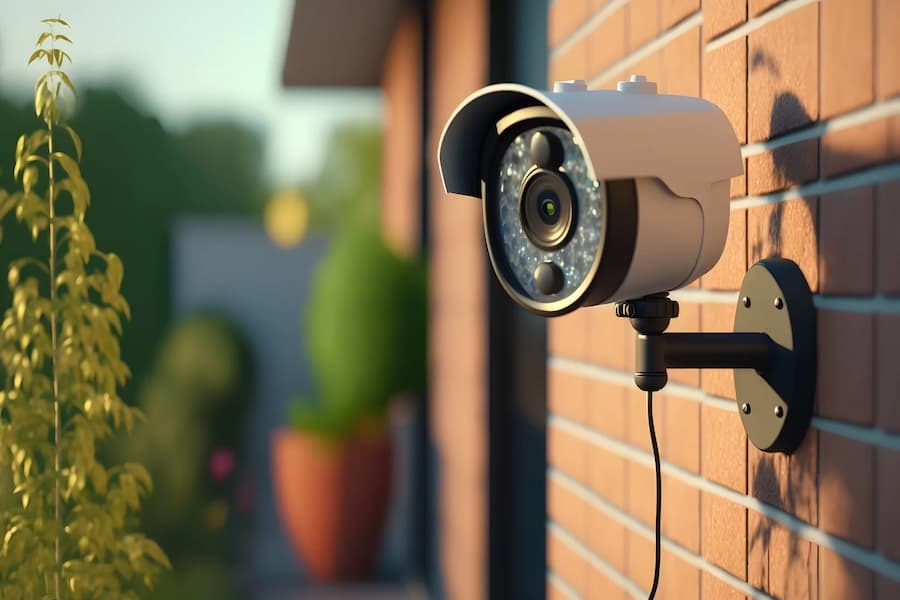
One of the best methods to increase your security and sense of calm is to protect your property’s borders. Outdoor security cameras are a dependable witness and a powerful deterrent, providing an important record of everything that happens on your property. However, selecting the appropriate one for your unique needs can be difficult due to the large selection of types offered. The UK’s erratic weather, with its frequent downpours and chilly winters, further complicates the decision-making process. We have put together eight crucial recommendations for choosing the best outdoor CCTV systems to secure your home, making sure you get a camera that is robust, practical, and ideal for your environment.
The IP Rating: Weatherproofing
Because of the challenging weather in the UK, your camera has to be made to endure strong wind, rain, and temperature changes. The ideal IP rating for outdoor use is between IP65 and IP67. The camera is fully protected from dust and can withstand low-pressure water streams from any angle due to its IP65 rating. IP67-rated cameras, like the eufy Cam S3 Pro, provide resistance to short-term immersion for even higher protection, making them ideal for the wettest environments. Year-round functioning will be ensured by a high-quality camera’s dependable operation at both high temperatures and below freezing.
Clarity is Important for Video Resolution
Resolution is essential when you have to recognise a number plate or a face. A higher resolution is a worthwhile investment for catching finer details, but a Full HD (1080p) camera is enough for general monitoring. Models providing 2K (4MP) or 4K (8MP) deliver considerably clearer pictures. The difference between 4K and regular HD is significant, allowing you to zoom in on video with much higher clarity. Think about utilising cameras with a dual-lens system, such as those that provide a wide 3K lens and a 2K telephoto lens, to capture both the whole scene and zoomed-in details at once.
Installation and Power Methods
Installation complexity and continuous maintenance are affected by the power supply. Wired cameras typically employ Power over Ethernet (PoE), which ensures a steady and ongoing power source, enabling continuous 24/7 recording, though they necessitate a more involved installation process. Despite usually recording on motion triggers and requiring occasional charging, solar- and battery-powered cameras are simpler to install and may be installed anywhere there is a strong Wi-Fi signal. By using direct sunshine to maintain a charge, solar-powered solutions like the eufy SoloCam S340 or the Tapo C660 Kit offer a set-and-forget option.
Seeing in the Dark with Night Vision
Because crime doesn’t cease when the sun sets, good night vision is crucial. To record crisp black and white video in total darkness, a large number of cameras employ infrared (IR) LEDs. More sophisticated systems, on the other hand, provide colour right vision through integrated spotlights or low-light sensors, allowing for more detailed video. A camera with a 0. 0 Lux rating can still record clear footage even in total darkness. A camera with a strong integrated floodlight, like the eufy Floodlight Camera E340, might be a good option if your installation location has poor illumination.
Modern Detection & AI
Motion detection has advanced from straightforward pixel-based systems to sophisticated AI that reduces false alerts. PIR sensors or radar are used in contemporary cameras to identify heat and movement, sifting out innocent causes like rain, shadows, or waving trees. Advanced AI can identify people, cars, pets, and faces, providing you with precise and pertinent notifications. Some cameras, such as the Baseus S2, provide onboard facial recognition, which lets you disregard known family members and get notifications only for unfamiliar faces. This technology saves you time while also ensuring that you are only alerted to real security threats.
Conclusion
You need to think about your specific requirements and surroundings when choosing the finest outdoor security cameras for your home. You can make sure your investment offers legitimate security by concentrating on crucial aspects such as an appropriate video resolution for your demands, smart detection capabilities to prevent false alerts, and a robust IP weather rating.
Since these will have a major influence on both the installation procedure and the long-term cost of ownership, don’t forget to take power and storage options into account. You may confidently choose a system that will safeguard your house and provide you the peace of mind you deserve by spending the time to evaluate these eight critical areas.