

Over the years, as a certified automotive engineer, I have helped hundreds of car owners save money and avoid breakdowns. I’ve learned what beginners struggle with the most and what simple steps make the biggest difference. This guide is based on real experience and industry expertise. It breaks down car maintenance into clear checklists and easy schedules, so you can confidently care for your car and avoid the stress I once faced.
The Importance of Car Maintenance
Regular car maintenance helps prevent big problems. A well-maintained car runs smoothly. It also saves you from expensive repairs. Maintenance keeps your car safe on the road. Checking fluids, brakes, tires, and other parts regularly avoids accidents. Even small tasks like topping up oil can make a big difference.
How Often Should You Take Your Car in for an Inspection?
Most cars need a checkup at least once a year. Some cars need it more often. Check your owner’s manual for the exact schedule. If your car shows warning lights or strange noises, take it in immediately. Inspections help catch issues early before they become costly.
Car Maintenance Costs
Car maintenance costs vary. Oil changes usually cost $30–$70 in the U.S. Tire rotation costs $20–$50. Brake pad replacement can be $150–$300. Costs depend on your car model and local labor rates. Doing some tasks yourself can save money. Always compare DIY vs professional costs.
Signs My Car Needs Maintenance Done
- Strange noises like squeaks or grinding.
- Dashboard warning lights.
- Car pulling to one side when driving.
- Low tire pressure or uneven tire wear.
- Bad smell from brakes or engine.
If you notice any of these, don’t wait. Fix it quickly.
Car Maintenance Checklist
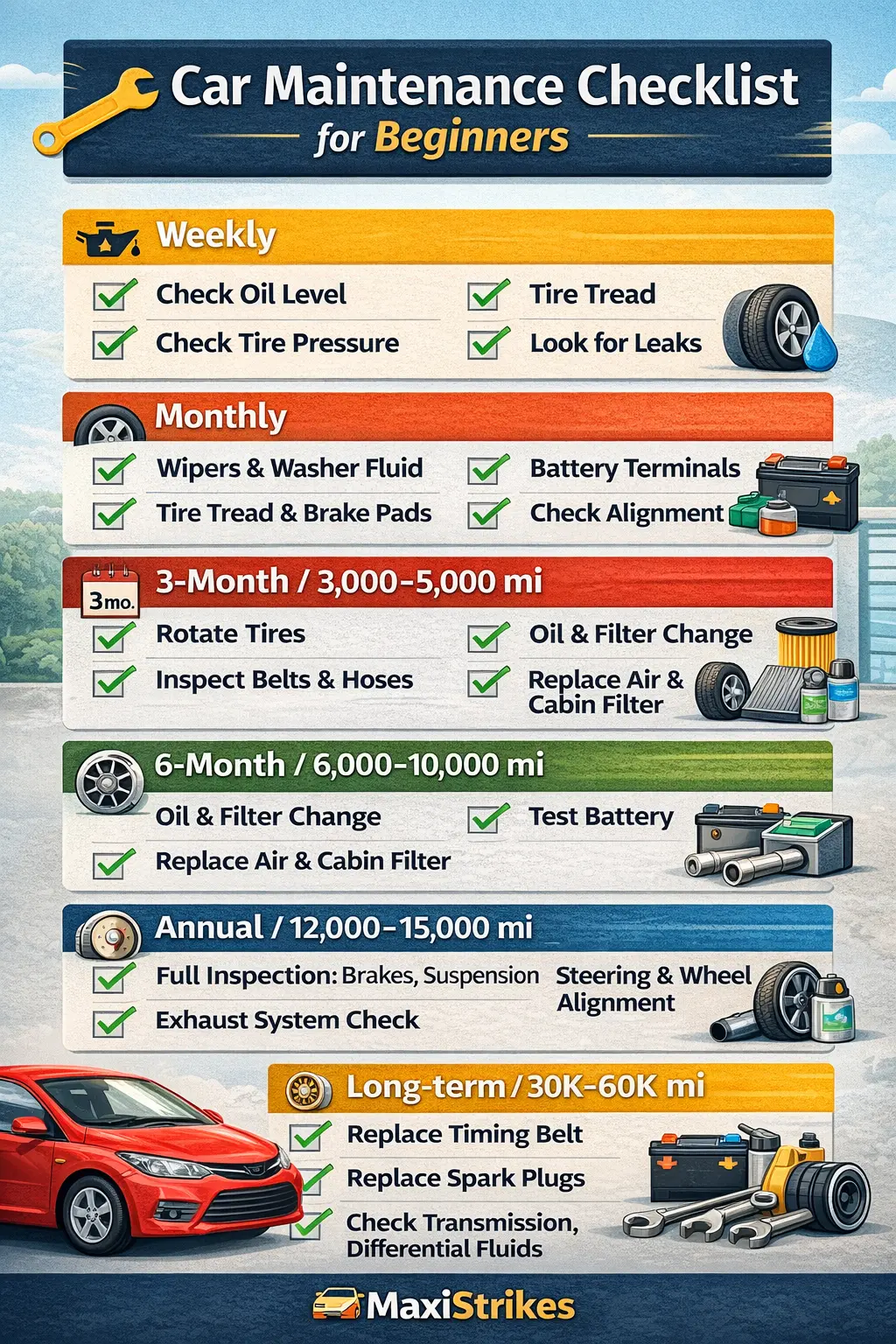
Infographic showing a beginner-friendly car maintenance checklist with tasks organized by frequency. Includes visual icons for oil, tires, brakes, and battery.
Car Maintenance Checklist Infographic for Beginners
- Oil level & oil change
- Coolant level
- Brake fluid & brakes
- Battery health
- Tire pressure & tire rotation
- Lights & wipers
- Belts & hoses
- Filters (engine & cabin)
Check these regularly to keep your car running well.
Service Immediately
- Check engine light stays on.
- Brake failure signs.
- Overheating engine.
- Leaking fluids.
Do not drive far with these issues. Take your car to a shop immediately.
Weekly Checks
- Check tire pressure.
- Check oil and coolant levels.
- Check lights (headlights, brake lights, indicators).
- Look for leaks under the car.
Monthly Checkup / Monthly Checks
- Windshield wipers and washer fluid.
- Battery terminals for corrosion.
- Tire tread depth.
- Brake pads for wear.
- Clean the car exterior and interior.
Wheel Alignment & Balancing: Check alignment and balancing once a year. Inspect after hitting potholes or suspension work.
3‑Month / Every 3 Months Checkup
- Rotate tires.
- Inspect belts and hoses.
- Check brake fluid and coolant levels.
- Inspect suspension and steering parts.
Transmission & Major Fluids:
- Check transmission fluid every 30,000–60,000 miles.
- Replace brake fluid every 2 years.
- Flush coolant every 60,000 miles.
6‑Month / Every 6 Months Checkup
- Oil and oil filter replacement if needed.
- Air filters (engine & cabin).
- Inspect lights and signals.
- Clean or replace battery if necessary.
Air Filter & Cabin Filter Replacement:
- Engine air filter: replace every 15,000–30,000 miles.
- Cabin air filter: replace every year.
Annual / Every Year Checkup
- Change engine oil and filter.
- Check all fluids.
- Inspect brakes, tires, and suspension.
- Check exhaust system.
- Inspect steering and wheel alignment.
Long‑Term / 2‑Year / Every 30K–60K Miles Checkup
- Replace timing belt if needed.
- Replace spark plugs.
- Flush coolant system.
- Inspect transmission fluid.
- Check and replace brake pads/rotors if worn.
Spark Plug Inspection & Replacement:
- Inspect spark plugs every 30,000–50,000 miles.
- Replace them if worn or dirty.
Differential & Transfer Case Fluids (AWD/4WD):
- Check differential fluid every 30,000–60,000 miles.
- Inspect transfer case fluid regularly and replace if needed.
EV Maintenance
- Battery health check.
- Coolant level for battery and inverter.
- Brake inspection (regenerative braking reduces wear).
- Tire pressure and tread check.
- Software updates from manufacturer.
Where to Find an Auto Repair Shop
Choose a certified repair shop. Look for ASE-certified mechanics. Ask friends or read online reviews. Check prices and services offered. A good shop can prevent future problems and give peace of mind. Keep a trusted mechanic for regular checkups.
Conclusion
Maintaining your car doesn’t have to be hard. From my experience, small, regular checks make a huge difference. A well-kept car lasts longer, runs smoother, and costs less in repairs.
With this guide, beginners can confidently handle basic maintenance. Follow the checklists, stay consistent, and you’ll save money and avoid unexpected breakdowns. Caring for your car today ensures reliability and peace of mind for years to come.
Visit our MaxiStrikes Home for more automotive tips.